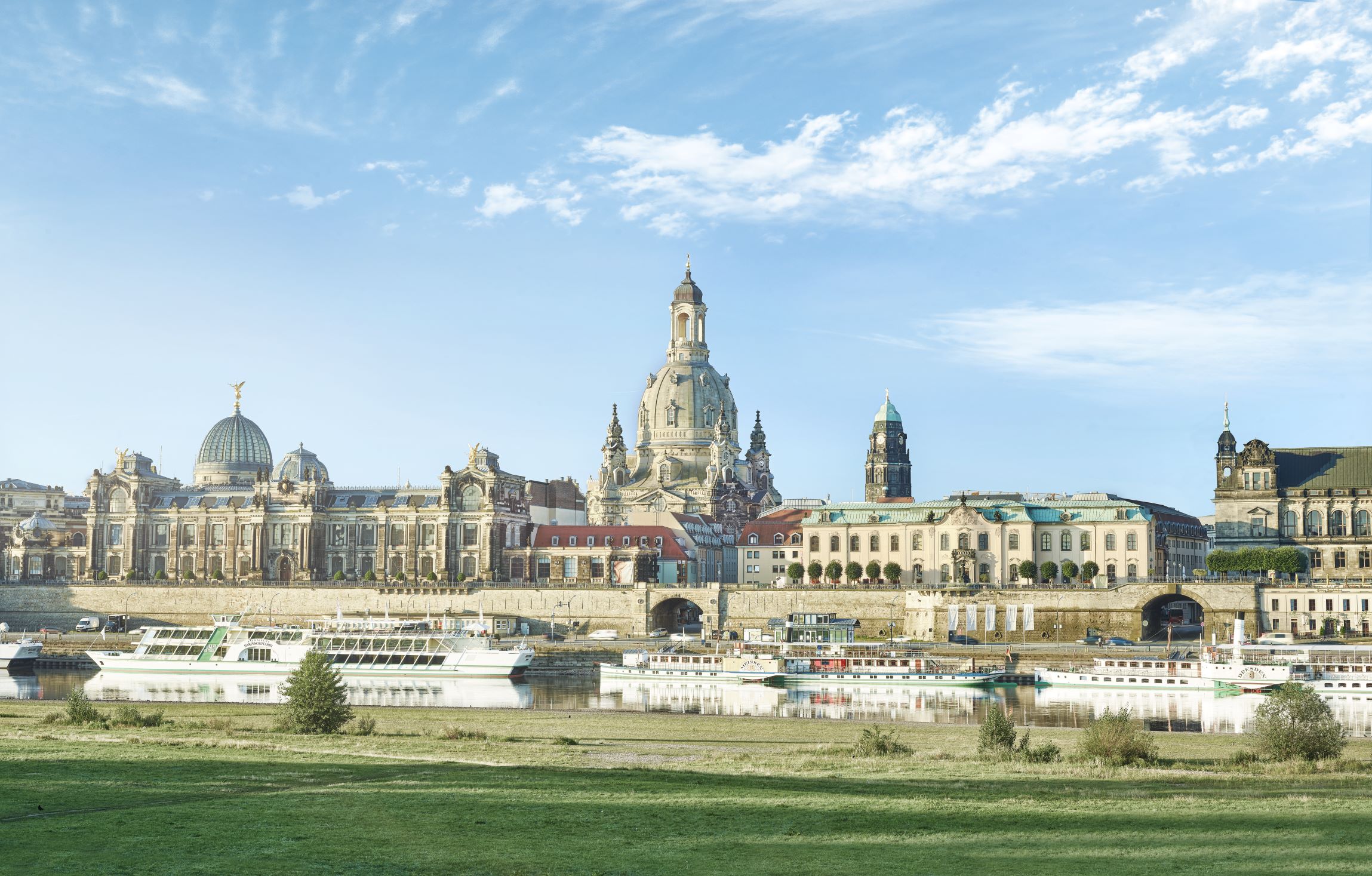
Portrait of Dresden
Frauenkirche, Zwinger, Semperoper, Elbe, a varied offering of museums and theatres – this is what makes Dresden one of the most popular tourist destinations in Germany. Several million visitors come to the Elbe metropolis every year to see the sights, admire the majestic ensemble of buildings, discover the fascinating history, pore over the art treasures and experience the unique atmosphere. More than 20 percent of these visitors come from outside Germany. The cosmopolitan character of Dresden is immediately apparent from the many different languages that can be heard in public places, especially at the universities and the various research institutions. There are ten Fraunhofer Gesellschaft facilities alone in the Saxon capital, and the presence of large multinationals such as Globalfoundries brings in many business travellers and immigrant workers from all parts of the world.
City of art and culture
Dresden is one of the truly great cities of art and culture thanks in no small part to the prince-electors and kings of Saxony, their desire to assert their prowess on the European scene and their passion for collecting. The city boasts more than 50 museums and at least 30 theatrical venues. The 14 constituent museums and galleries of the Dresden State Art Collections make it one of the most important such groupings in the world. Based at the Semper Opera House, the Sächsische Staatskapelle ranks among the world’s top classical orchestras. The Dresden Music Festival, the Moritzburg Festival, the Dixieland Festival and Jazztage Dresden are major highlights of the European music calendar. The recent opening of the new Kraftwerk Mitte Dresden arts and creative centre area with its two prominent tenants – the Dresden State Opera and the Junge Generation theatre (tjg) – illustrates the importance that the state capital attaches to its cultural life. But the claim to cultural heart of the city must surely go to the refurbished Kulturpalast (Palace of Culture) which is now home to the Dresden Philharmonic Orchestra, the Herkuleskeule cabaret company and the municipal library.
Bastion of business and science
The scientific landscape of Dresden is also one of diversity and variety. There are over 40 research institutions in the city, and all four major German research organisations have facilities here. TU Dresden is one of the eleven German institutes of higher learning that have qualified for University of Excellence status since 2012; it is now part of the successor programme to the Excellence initiative.
Furthermore, the Saxon capital is a major hub for microelectronics, ICT, nanotechnology and the exciting fields of New Materials, Life Sciences and biotechnology. Multinational companies such as Globalfoundries, GlaxoSmithKline Biologicals, VON ARDENNE and Novaled have put down roots in Dresden. Academia and industry are working in close collaboration on smart solutions for the future.
Green city
The Saxon metropolis is one of the greenest cities in Europe. The Grosser Garten park, the Elbe embankments, the Dresden Heath and various former palaces with extensive grounds plus numerous other parks and green spaces in and around Dresden are an irresistible invitation to spend more time outdoors; they play a key role in shaping the quality of life in the city. The green cityscape is further enhanced by the vineyards on the south-facing slopes of the Elbe valley. Some of the estates are even located inside the city boundaries. This makes Dresden the northernmost city with a winemaking tradition.
Facts and figures
Dresden is the capital of the Free State of Saxony, the most south-easterly of the 16 German federal states. The population as of December 2021 was 561.000. It is only about two hours by car to the German federal capital of Berlin in the north or to the Czech capital of Prague in the south. The close proximity of neighbouring countries is also evident from the large number of Czech and Polish visitors.